


Why am i stuck despite training 4 to 5 times a week? The 7 most common causes
PLATEAUS
Angonese Manon
6/19/202610 min read
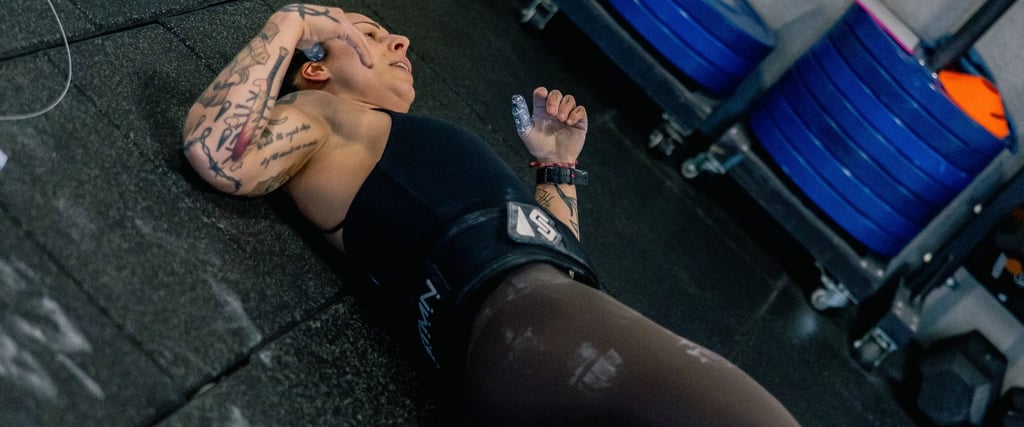

You train often, you do WODs, you sweat, you give it everything… and yet your performance is no longer improving?
A CrossFit plateau is very often linked to a mix of insufficient recovery, overly repetitive programming, poorly adjusted nutrition, and vague progress tracking — not just the number of sessions you do.
Introduction
When you train 4 to 5 times a week, it’s logical to think progress should follow. In reality, the body adapts quickly, then it needs a new stimulus, better recovery, and a cleaner strategy to keep improving. A study on recovery after a CrossFit benchmark showed that some fatigue markers were still affected for at least 24 hours after the effort, with a more complete return to baseline between 48 and 72 hours depending on the indicator. [sciencedirect]
In other words, training a lot does not guarantee progress. And what if the real question was not “how many sessions do you do? ” but rather “are those sessions actually moving you forward?”
1. You keep repeating the same stimulus
The body is a machine that adapts. If you repeat the same formats, the same intensities, the same loads, and the same movement patterns, you end up becoming very efficient… but only at what you already do. This is a classic cause of stagnation in CrossFit, because the variety of the sport can sometimes create the illusion of progress while the actual stimulus stays the same.
The signs are easy to spot: the same scores, the same sensations, the same type of fatigue, and no real improvement on key movements. To restart progress, you need to change one lever at a time: volume, intensity, tempo, rest, or technical focus. The goal is not to change everything every week, but to avoid repeating the exact same session on loop.
2. You recover poorly between sessions
Recovery is often the first weak point among regular trainees. Sleep, stress, mental load, and training density directly affect your ability to produce force, sustain intensity, and learn movements. The literature on athletes reminds us that performance depends on a balance between stress and recovery, not just on training itself.
In CrossFit athletes, poor recovery shows up fast: heavy legs, lower motivation, irritability, lingering soreness, and the feeling of being “flat” right from the warm-up. On a practical level, aim for more regular nights, truly lighter days, and better management of busy weeks. Proper recovery can do more for your progress than an extra random session ever will.
3. Your intensity is poorly managed
A lot of athletes think they need to go all-out all the time to improve. In CrossFit, it’s often the opposite: if you go too hard on every WOD, you get fatigued faster than you build, and you eventually stall. On the other hand, if you always stay in the comfort zone, you maintain fitness without creating real adaptation. [sciencedirect]
The right dosage looks like a curve, not a permanent sprint. Some sessions should be very high quality, others more controlled, and a few should be truly technical or aerobic. A good indicator: if you finish every session destroyed, but your performance hasn’t improved over 4 to 6 weeks, your intensity is probably poorly managed.
4. Your nutrition does not support the effort
You can have the best program in the world, but if you don’t have enough fuel, progress will be slow. A recent review on nutrition in CrossFit concluded that carbohydrate intake is often below recommendations among practitioners, while protein intake is generally closer to needs. It also noted that higher carbohydrate intake is associated with better performance, while caffeine shows a significant effect before or during sessions. [research.ulusofona]
The problem is not only “eating healthy.” You also need to eat enough, especially if you’re training 4 to 5 times a week with intensity. When energy is low, you lose power, recovery, and sometimes even motivation. If you want to improve, first look at meal consistency, carbohydrate intake around training, and total protein intake.
5. Your mobility or technique is holding you back
Sometimes the engine is not the problem, the mechanics are. Limited mobility, unstable positions, or sloppy technique can cost you time, energy, and strength on movements like the overhead squat, snatch, clean, or gymnastic skills. In CrossFit, a small technical flaw repeated hundreds of times quickly becomes a real performance ceiling.
The signs are clear: you miss positions, compensate in the same place, or improve in cardio but not in barbell movements. To break through that ceiling, you need to go back to the basics: targeted mobility, positions, tempo, pauses, and clean repetitions at moderate loads. Technique is not a “bonus” — it is often the main lock.
6. You train often, but without a real plan
Training 5 times a week only works if the sessions tell a coherent story. Without a plan, you risk stacking intense WODs, max attempts, long metcons, skill work, and volume without any progression logic. The result: a lot of effort, very little direction.
A good CrossFit week alternates priorities: strength, engine, skill, recovery, and possibly a test session. Here is a simple reference:
When everything becomes “hard,” nothing is truly productive anymore. Planning is exactly what turns frequency into progress.
7. You are not tracking your progress correctly
A lot of athletes think they are stuck when they are simply not tracking the right indicators. If you don’t write down your loads, times, recovery feeling, or technical cues, you end up judging progress based on how you feel that day. A CrossFit plateau can be real, but it can also be misdiagnosed.
You need to track several layers: performance, sensation, recovery, and movement quality. For example, you may be stronger on a lift, more consistent on a benchmark, recovering better between efforts, and feeling less beat up after sessions. If you only look at one score, you miss the bigger picture.
Diagnostic table
Here is a quick reading of the 7 most common causes and their main fix:
Concrete example
Let’s take a 32-year-old athlete who has been training 5 times a week for two years. She does a lot of WODs, sleeps badly because of work, eats “clean” but not enough, and often repeats the same formats because she loves intense sessions. After a few months, her lifts stall, her times stop dropping, and she feels tired all the time.
In that case, the problem is not a lack of willpower. It comes from a stack of small mistakes: limited recovery, insufficient fuel, too much high intensity, and no real planning. Once she structures her weeks better, eats more around training, and reduces the constant all-out approach, progress starts moving again. [research.ulusofona]
Conclusion
A CrossFit plateau almost never comes from just one reason. Most of the time, it is the result of a mix of repeated stimulus, insufficient recovery, poorly managed intensity, too little nutrition, technical limitations, unclear programming, and poor progress tracking.
The good news is that all of this can be unlocked with simple but consistent adjustments.
✅ Here is your guideline for next week
You now know the 7 main causes of stagnation in CrossFit.
To avoid staying in theory, fill out this checklist this week and fix one cause at a time.
👉 The goal: observe your results over the next 7 days and unlock your progress.
At Black Chapter, we take all of these factors into account and closely track our athletes.
👉 DO YOU WANT THAT SAME LEVEL OF PRECISION FOR YOUR OWN PROGRESS ?
GET 10% OFF YOUR PROGRAMMING WITH “STAGNATION-FREE” ON OUR Chapter Compete PROGRAMMING.
You train often, you do WODs, you sweat, you give it everything… and yet your performance is no longer improving?
A CrossFit plateau is very often linked to a mix of insufficient recovery, overly repetitive programming, poorly adjusted nutrition, and vague progress tracking — not just the number of sessions you do.
Introduction
When you train 4 to 5 times a week, it’s logical to think progress should follow. In reality, the body adapts quickly, then it needs a new stimulus, better recovery, and a cleaner strategy to keep improving. A study on recovery after a CrossFit benchmark showed that some fatigue markers were still affected for at least 24 hours after the effort, with a more complete return to baseline between 48 and 72 hours depending on the indicator. [sciencedirect]
In other words, training a lot does not guarantee progress. And what if the real question was not “how many sessions do you do? ” but rather “are those sessions actually moving you forward?”
1. You keep repeating the same stimulus
The body is a machine that adapts. If you repeat the same formats, the same intensities, the same loads, and the same movement patterns, you end up becoming very efficient… but only at what you already do. This is a classic cause of stagnation in CrossFit, because the variety of the sport can sometimes create the illusion of progress while the actual stimulus stays the same.
The signs are easy to spot: the same scores, the same sensations, the same type of fatigue, and no real improvement on key movements. To restart progress, you need to change one lever at a time: volume, intensity, tempo, rest, or technical focus. The goal is not to change everything every week, but to avoid repeating the exact same session on loop.
2. You recover poorly between sessions
Recovery is often the first weak point among regular trainees. Sleep, stress, mental load, and training density directly affect your ability to produce force, sustain intensity, and learn movements. The literature on athletes reminds us that performance depends on a balance between stress and recovery, not just on training itself.
In CrossFit athletes, poor recovery shows up fast: heavy legs, lower motivation, irritability, lingering soreness, and the feeling of being “flat” right from the warm-up. On a practical level, aim for more regular nights, truly lighter days, and better management of busy weeks. Proper recovery can do more for your progress than an extra random session ever will.
3. Your intensity is poorly managed
A lot of athletes think they need to go all-out all the time to improve. In CrossFit, it’s often the opposite: if you go too hard on every WOD, you get fatigued faster than you build, and you eventually stall. On the other hand, if you always stay in the comfort zone, you maintain fitness without creating real adaptation. [sciencedirect]
The right dosage looks like a curve, not a permanent sprint. Some sessions should be very high quality, others more controlled, and a few should be truly technical or aerobic. A good indicator: if you finish every session destroyed, but your performance hasn’t improved over 4 to 6 weeks, your intensity is probably poorly managed.
4. Your nutrition does not support the effort
You can have the best program in the world, but if you don’t have enough fuel, progress will be slow. A recent review on nutrition in CrossFit concluded that carbohydrate intake is often below recommendations among practitioners, while protein intake is generally closer to needs. It also noted that higher carbohydrate intake is associated with better performance, while caffeine shows a significant effect before or during sessions. [research.ulusofona]
The problem is not only “eating healthy.” You also need to eat enough, especially if you’re training 4 to 5 times a week with intensity. When energy is low, you lose power, recovery, and sometimes even motivation. If you want to improve, first look at meal consistency, carbohydrate intake around training, and total protein intake.
5. Your mobility or technique is holding you back
Sometimes the engine is not the problem, the mechanics are. Limited mobility, unstable positions, or sloppy technique can cost you time, energy, and strength on movements like the overhead squat, snatch, clean, or gymnastic skills. In CrossFit, a small technical flaw repeated hundreds of times quickly becomes a real performance ceiling.
The signs are clear: you miss positions, compensate in the same place, or improve in cardio but not in barbell movements. To break through that ceiling, you need to go back to the basics: targeted mobility, positions, tempo, pauses, and clean repetitions at moderate loads. Technique is not a “bonus” — it is often the main lock.
6. You train often, but without a real plan
Training 5 times a week only works if the sessions tell a coherent story. Without a plan, you risk stacking intense WODs, max attempts, long metcons, skill work, and volume without any progression logic. The result: a lot of effort, very little direction.
A good CrossFit week alternates priorities: strength, engine, skill, recovery, and possibly a test session. Here is a simple reference:
When everything becomes “hard,” nothing is truly productive anymore. Planning is exactly what turns frequency into progress.
7. You are not tracking your progress correctly
A lot of athletes think they are stuck when they are simply not tracking the right indicators. If you don’t write down your loads, times, recovery feeling, or technical cues, you end up judging progress based on how you feel that day. A CrossFit plateau can be real, but it can also be misdiagnosed.
You need to track several layers: performance, sensation, recovery, and movement quality. For example, you may be stronger on a lift, more consistent on a benchmark, recovering better between efforts, and feeling less beat up after sessions. If you only look at one score, you miss the bigger picture.
Diagnostic table
Here is a quick reading of the 7 most common causes and their main fix:
Concrete example
Let’s take a 32-year-old athlete who has been training 5 times a week for two years. She does a lot of WODs, sleeps badly because of work, eats “clean” but not enough, and often repeats the same formats because she loves intense sessions. After a few months, her lifts stall, her times stop dropping, and she feels tired all the time.
In that case, the problem is not a lack of willpower. It comes from a stack of small mistakes: limited recovery, insufficient fuel, too much high intensity, and no real planning. Once she structures her weeks better, eats more around training, and reduces the constant all-out approach, progress starts moving again. [research.ulusofona]
Conclusion
A CrossFit plateau almost never comes from just one reason. Most of the time, it is the result of a mix of repeated stimulus, insufficient recovery, poorly managed intensity, too little nutrition, technical limitations, unclear programming, and poor progress tracking.
The good news is that all of this can be unlocked with simple but consistent adjustments.
✅ Here is your guideline for next week
You now know the 7 main causes of stagnation in CrossFit.
To avoid staying in theory, fill out this checklist this week and fix one cause at a time.
👉 The goal: observe your results over the next 7 days and unlock your progress.
At Black Chapter, we take all of these factors into account and closely track our athletes.
👉 DO YOU WANT THAT SAME LEVEL OF PRECISION FOR YOUR OWN PROGRESS ?
GET 10% OFF YOUR PROGRAMMING WITH “STAGNATION-FREE” ON OUR
Chapter Compete PROGRAMMING.




BLACK CHAPTER
PROGRAMMING
From shadows to light.
Online Programming.
Individualized Coaching.
CONTACT
OUR PARTNERS
FOLLOW US
©2026 Black chapter programming. All rights reserved.
OUR gym
Useful links: Terms and Conditions · Refund Policy · Privacy Policy · Legal Notice